![sonicu-logo-newhd.png]](https://partners.sonicu.com/hs-fs/hubfs/sonicu-logo-newhd.png?height=50&name=sonicu-logo-newhd.png)
Sonicu implementations are designed to be efficient, accurate, and minimally disruptive. Whether installation is handled by Sonicu, a trained partner, or the customer, the process follows a proven framework to ensure proper setup, reliable connectivity, and confidence from day one.
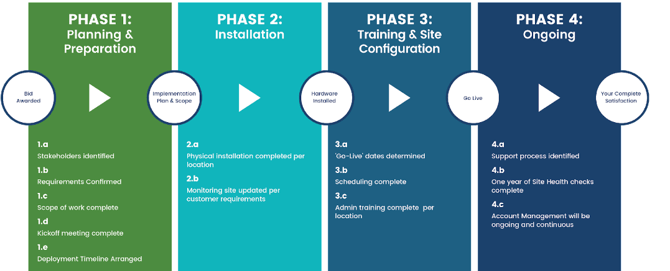
This phased implementation approach gives partners a clear framework to set expectations, guide customers, and confidently position Sonicu solutions—from planning through long-term success.
For questions about implementation options or professional installation services, contact partners@sonicu.com
Phase 1: Planning & Preparation
Proper planning ensures a smooth and efficient installation.
During this phase, Sonicu or a Sonicu Partner works with partners and customers to:
-
Review project scope, hardware requirements, and site details
-
Confirm installation approach (self-install, partner-led, or Sonicu professional installation)
-
Prepare hardware, sensors, and calibration needs
-
Align on timelines and readiness for deployment
This phase helps ensure the right equipment is in place and that expectations are aligned before installation begins.
Phase 2: Installation
Installation is completed following Sonicu's best practices for connectivity, accessibility, and regulatory considerations.
Hardware & Sensor Installation includes:
-
Installation of all Sonicu hardware and sensors
-
Proper cable management using tie blocks and zip ties to prevent unplugging or tripping hazards
-
Verification that all hardware is installed correctly and free from damage
For professional installations, Sonicu experts are on-site to ensure accuracy and reliability from day one.
Phase 3: Training & Site Configuration
Once hardware is installed, the system is activated and configured within SoniCloud.
This phase includes:
-
Activation of all monitoring sensors and probes using the SoniCloud Mobile App
-
Naming, organizing, and preparing the SoniCloud platform
-
Initial site configuration to ensure monitoring points are visible and operational
-
Optional SNAP Calibration sensor exchange, including uploading updated NIST certificates
-
A courtesy overview of the hardware to help prevent “no probe” or offline states
This phase ensures users are familiar with the system and that the platform is ready for day-to-day use
Phase 4: Ongoing Support & Optimization
After go-live, Sonicu continues to support long-term system performance and compliance.
Ongoing support may include:
-
Preventative maintenance visits (optional), such as firmware updates, battery replacements, and issue resolution
-
A Site Health Check conducted by the Customer Success Manager (CSM)
-
Identification of missing alarms, long-lived alerts, or configuration gaps
-
Reporting and recommendations to help administrators optimize their SoniCloud setup
This phase helps ensure systems remain accurate, compliant, and reliable over time.